We design, build and program robots, end to end.
Mobile platforms, manipulators, humanoids and the perception and control software that makes them useful. From concept through CAD, electronics and firmware to ROS 2, simulation and field testing.
What we do
From a first sketch to a robot that works in its environment.
Robot systems
Mobile robots and manipulators designed from scratch: mechanical design, custom PCBs, motor control firmware and the ROS 2 stack that drives them.
Autonomy and navigation
SLAM, Nav2 navigation, behaviour trees and multi-floor frameworks for robots that work in real buildings and on open water.
Perception and AI
Detection, segmentation and tracking from LiDAR and cameras, trained on data we collect and deployed on embedded compute.
Robot learning and humanoids
Reinforcement learning, imitation learning and vision-language-action policies for bimanual manipulation and whole-body humanoid control, developed simulation-first.
Selected work
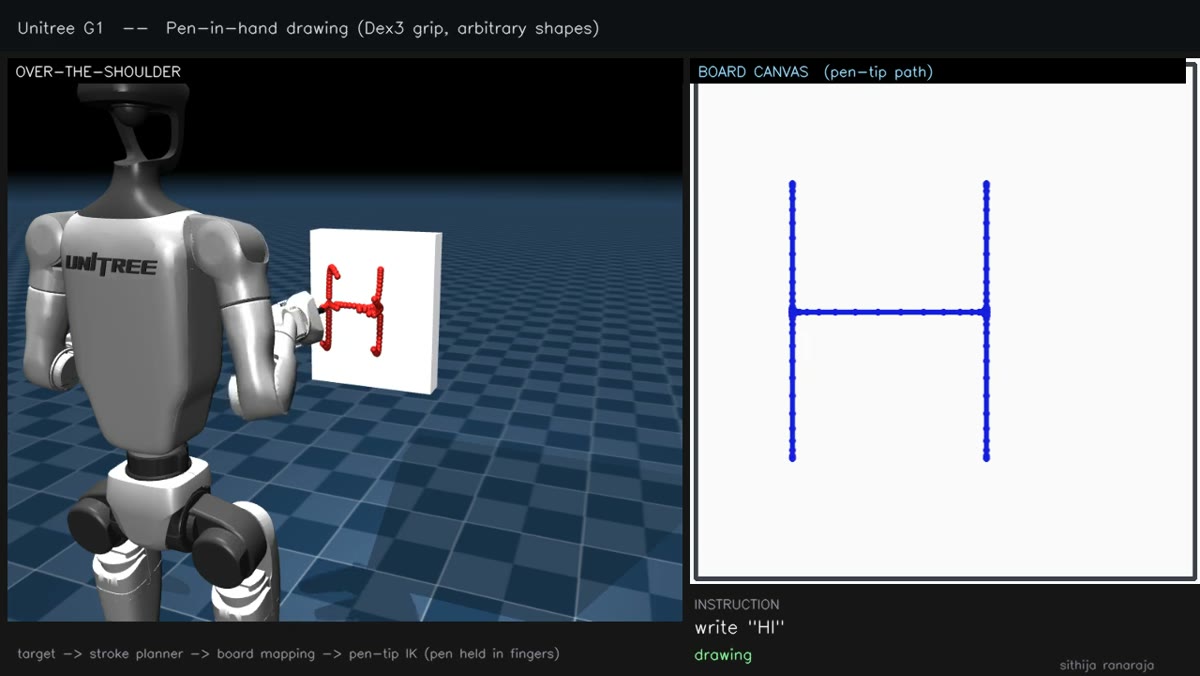
Humanoid control
Loco-manipulation on the Unitree G1: a vision-language-action model as the brain, a whole-body controller as the body, developed simulation-first.
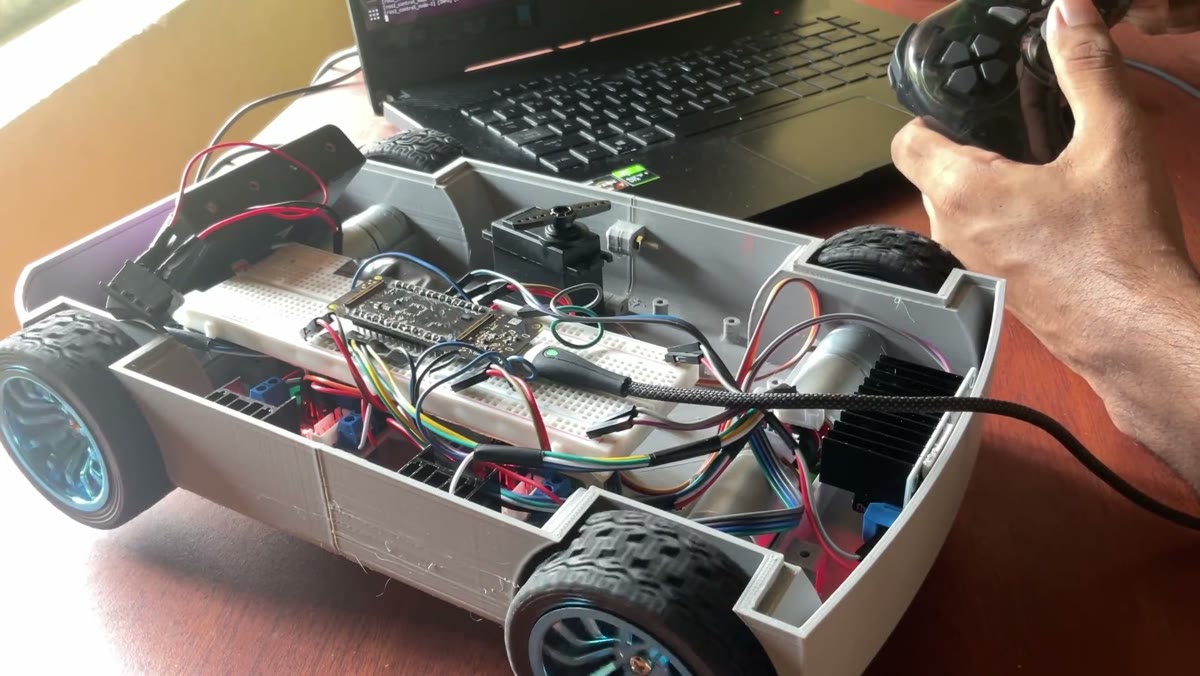
Voyager
A differential-drive research platform: chassis, electronics, firmware and ROS 2 autonomy, all designed in-house.
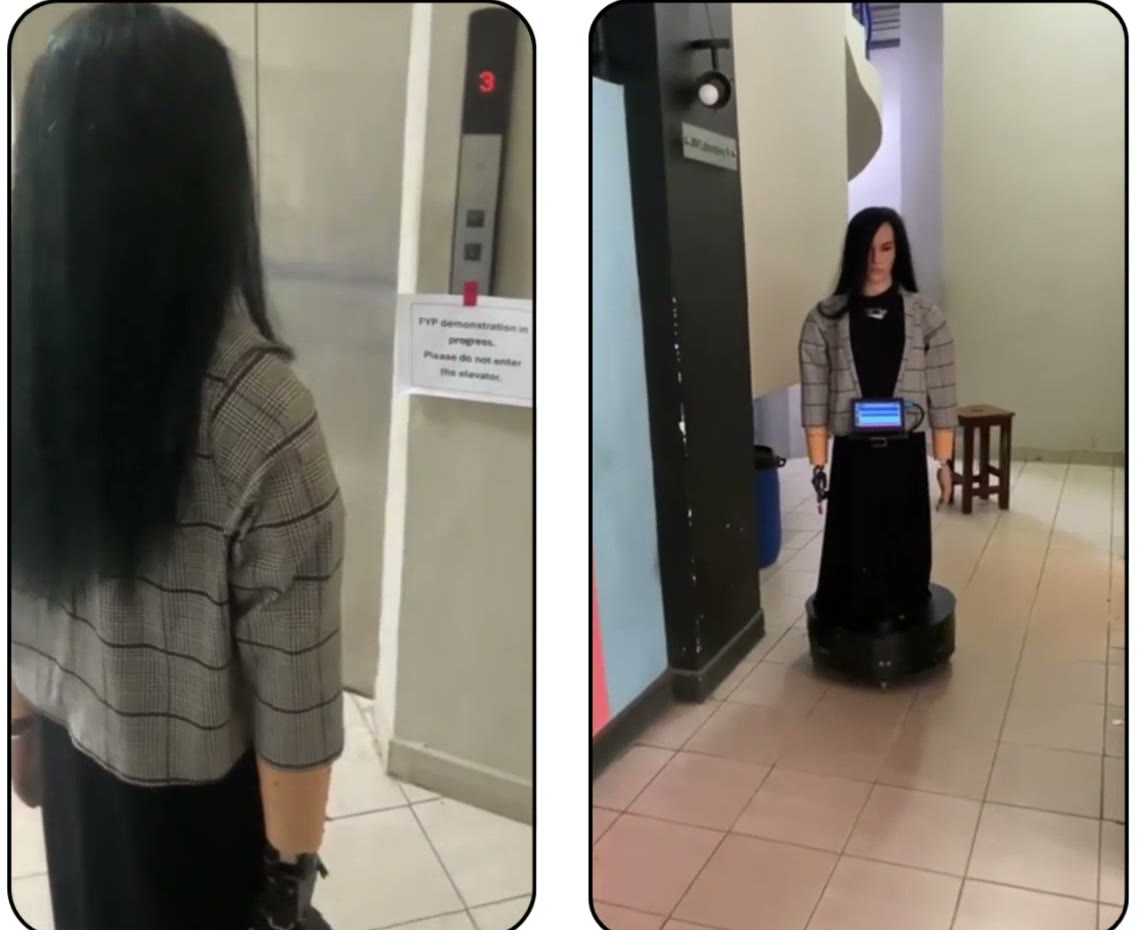
Multi-floor receptionist robot
A semi-humanoid receptionist that greets visitors, navigates crowds and rides elevators between floors on its own.
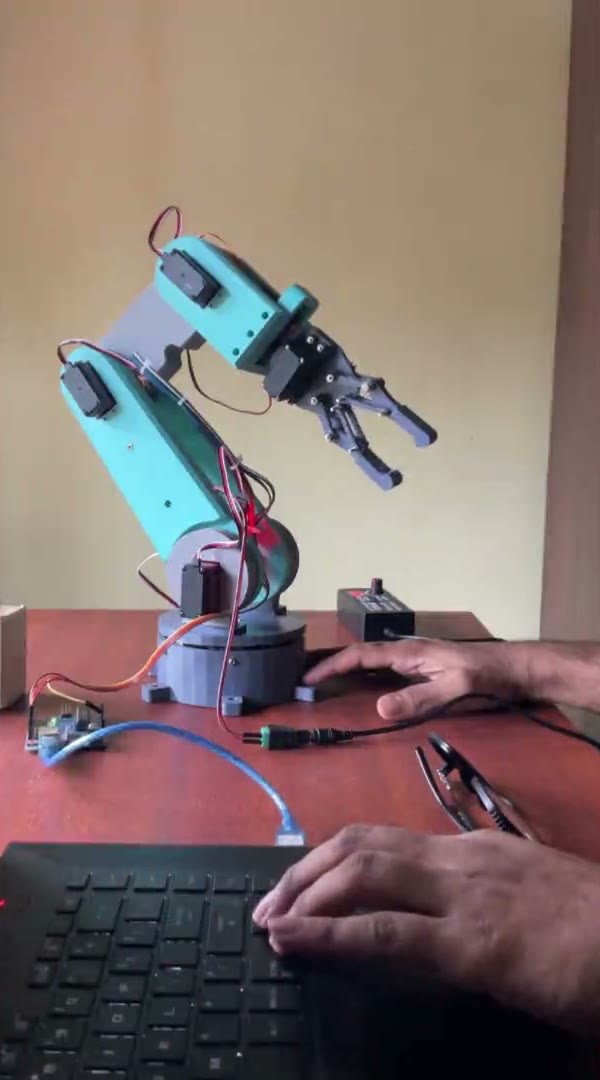
Hydra
A 6-DOF robot arm designed, printed, wired and programmed in-house, with MoveIt 2 planning and MoveIt Servo real-time control.
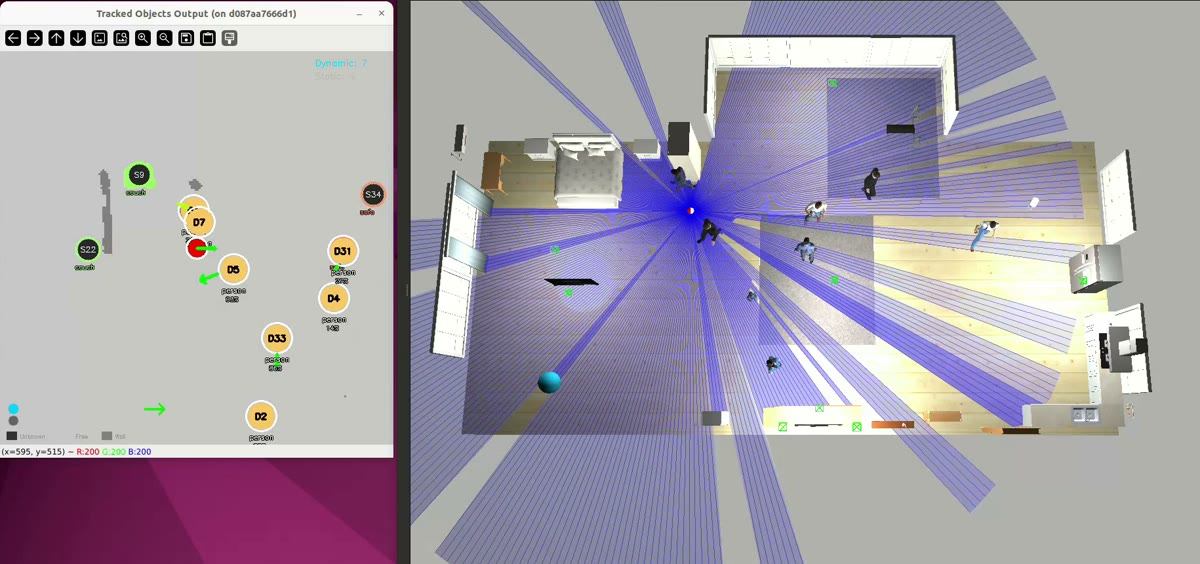
LiDAR perception
An end-to-end AI system that detects, classifies and tracks people and objects from LiDAR data in real time, deployed on target hardware.
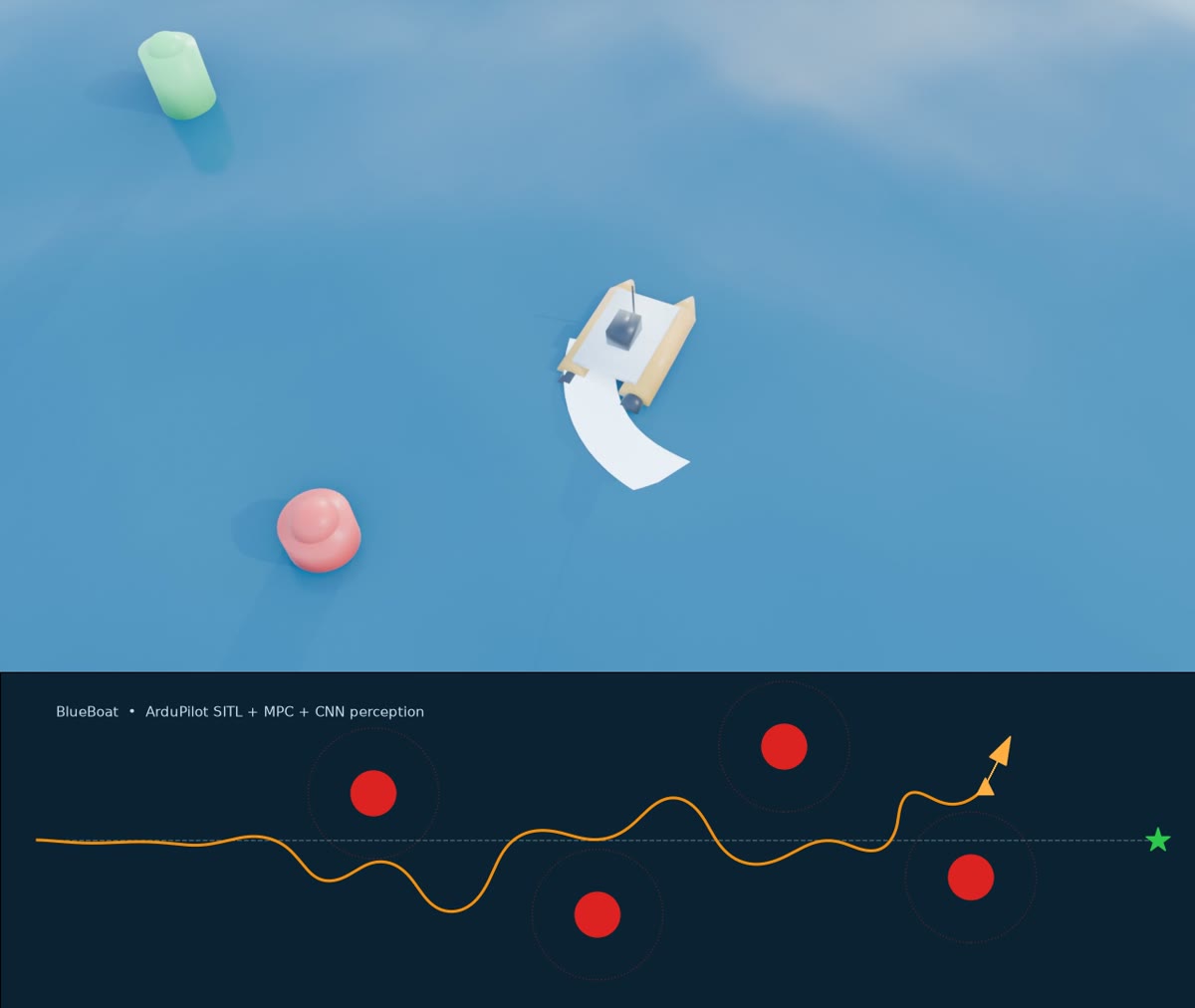
Autonomous surface vessel
A Blue Robotics BlueBoat crossing open water through a buoy field, driven by real ArduPilot SITL, an MPPI controller and a CNN that sees only the forward camera.
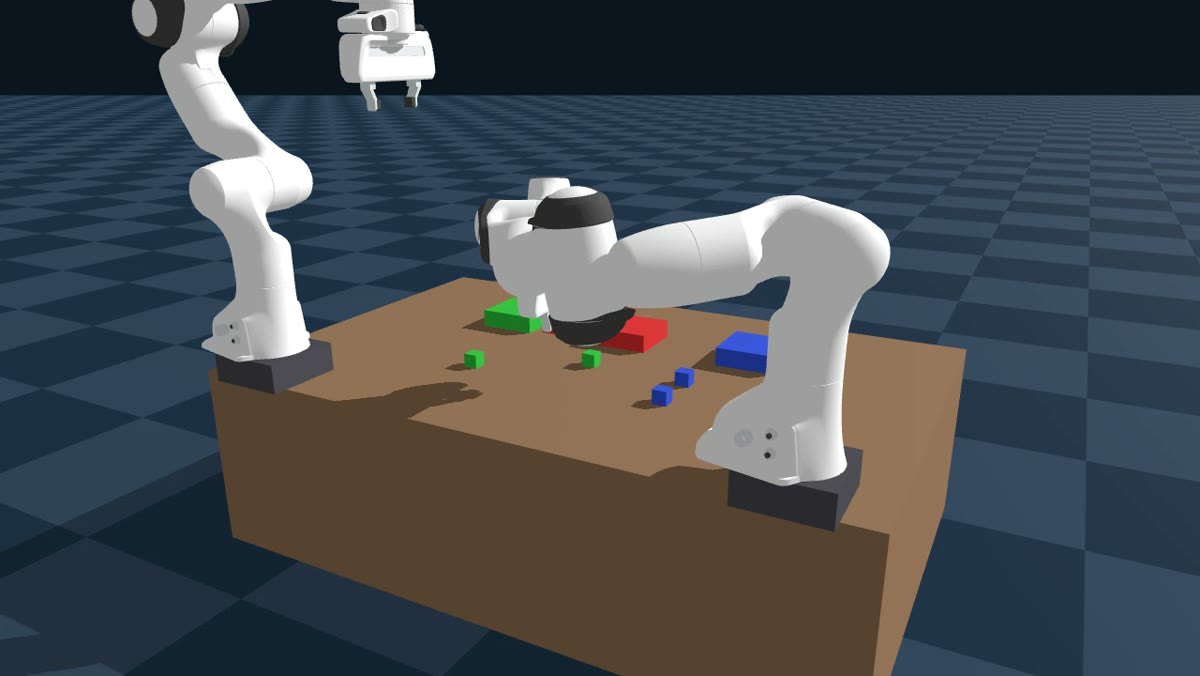
Language-conditioned manipulation
A vision-language-action pipeline in which two Franka arms follow typed instructions to pick, place and sort objects.
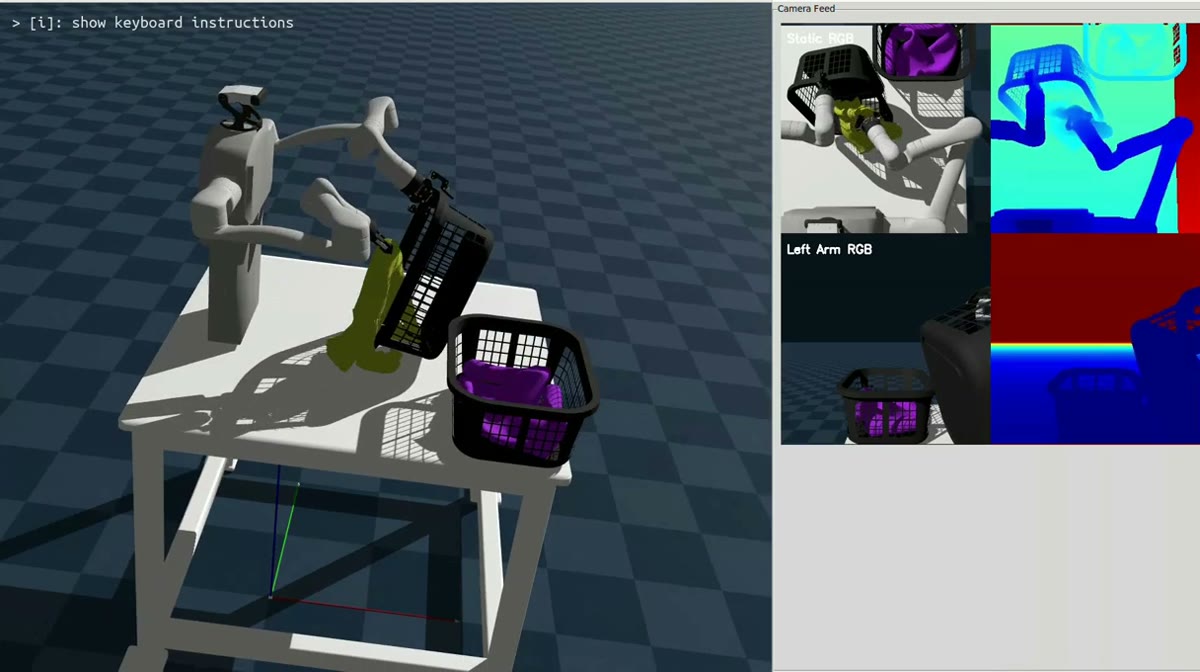
Soft-material handling
Two Kinova Gen3 arms learning to handle soft, deformable material from teleoperated demonstrations in simulation.
How we work
Simulation first; hardware trials are confirmation.
Define
A short scoping phase settles requirements, the platform and the risks. For hardware selection we deliver a costed comparison with driver support verified per component.
Build in simulation first
Navigation, manipulation and control are developed and tested in Gazebo, MuJoCo, Isaac or Genesis before hardware, so the first trials on the robot are confirmation, not discovery.
Deploy and hand over
Software is delivered as modular ROS 2 packages with documentation, and tested on the target hardware in the real environment.
Tools and stack
What the work above was built with.
- Robotics software
- ROS 2 Humble, Nav2, SLAM Toolbox, MoveIt 2, MoveIt Servo, ros2_control, BehaviorTree.CPP, micro-ROS
- Simulation
- Gazebo, Isaac Sim and Isaac Lab, MuJoCo, Genesis, Webots
- AI and learning
- PyTorch, reinforcement and imitation learning, VLA models (GR00T, SmolVLA), YOLO, U-Net segmentation, multi-object tracking, LeRobot
- Hardware
- SolidWorks, PCB design, 3D printing, NVIDIA Jetson, Raspberry Pi, Arduino Portenta, ESP32, LattePanda
- Sensors
- 2D LiDAR, RGB-D cameras, mmWave radar, IMU, microphone arrays, 360° cameras
- Languages
- C++, Python, MATLAB
Have a system that needs building?
Tell us what it is and what it has to do. We reply from sithija@xyonlabs.com.